Mahjong for Seniors
- 4.6
- Rating
- 5.00M
- Installs
- Free
- Price

 Analysis by App-foxy
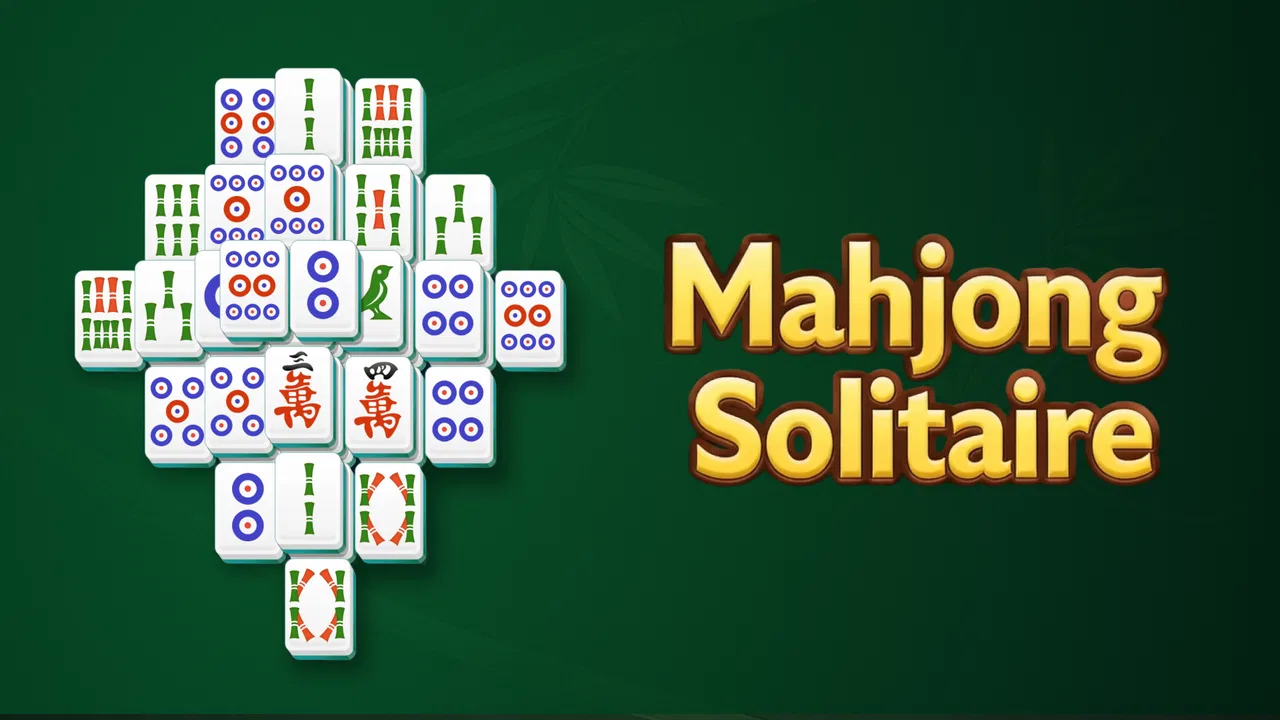
I spent time with Mahjong for Seniors as a quiet, tile-matching board game rather than as a competitive mahjong simulator. That distinction matters. The app is built around arranging and clearing matching tiles, so the appeal comes from concentration, visual scanning, and the satisfaction of gradually opening a crowded board. It is a simple idea, but it can be surprisingly absorbing when I want something calm that still asks me to think.
It comes from Appgeneration - Radio, Podcasts, Games and is available as a free game for Android devices. The store information places it in the board-game category, gives it an Everyone age rating, and lists support from Android 9 onward. A 4.7 average from around 80 thousand ratings and more than 5 million installs suggest that the format has found a broad audience, especially among people looking for an approachable puzzle rather than an action-heavy game.
How the free model affects the experience
The most important cost detail is straightforward: the game can be installed and played for free. That makes it easy to try without committing money first, which suits this type of relaxing puzzle particularly well. I can see its value after a short session, so the free entry point is more useful here than it would be in a game that expects a long learning period before becoming enjoyable.
You May Also Like

 Blood Strike: 2.5 Anniversary
Blood Strike’s Loadouts Turn Every Drop Into a Tactical Gamble
A close look at Blood Strike’s custom loadouts: how fast access to signature weapons reshapes its battle royale rhythm, rewards preparation, and narrows the gap between fights.

 Pandora - Music & Podcasts
Pandora’s Music Is Easy to Start, but Harder to Recover
Pandora’s strength is its low-effort path from a seed to a station. Its weak spot is how much confidence it asks you to place in connection, setup, and quiet recovery.

 8 Ball Pool
 Is Built on Rivalries, Rematches, and Routine
A close look at the rivalries, rematches, shared routines, and unanswered safety questions that turn a quick pool match into a persistent mobile community.

 Samsung Music
’s Quiet Strength Is Playing What You Already Own
Its reach comes less from spectacle than from dependable access to a personal library. That simplicity is both the app’s strongest retention engine and its ceiling.

 AccuWeather: Weather Radar
AccuWeather Review: A Quick, Clear Forecast for Everyday Decisions
For everyday plans, the best forecast is the one you can understand quickly. AccuWeather makes rain timing, radar, and local conditions easy to act on, with a few trade-offs.

 Hill Climb Racing
Why Hill Climb Racing Still Turns Crashes Into One More Run
A tiny car, a bumpy hill and one more upgrade: Hill Climb Racing keeps resurfacing because its simple chaos makes every near-miss feel personal.
More From Our News Desk



There are in-app purchases ranging from $0.99 to $12.99 per item. I would treat those as optional spending rather than part of the basic decision to install. The free version is the relevant starting point for anyone who simply wants a tile puzzle for occasional use. If you are comparing it with a paid board-game app, the sensible approach is to play the free edition first and decide whether any optional purchase improves your personal routine enough to justify it.
I also appreciate that the price question does not need to be confused with the game’s age rating. It is suitable for Everyone, while the purchase range is a separate consideration for families or anyone trying to keep spending controlled. Before handing the phone to a child or an older relative, I would still use the device’s purchase controls, because free installation does not automatically mean every optional transaction is unavailable.
The current version is 4.23, and the game was released on October 30, 2020. Those details give the app some useful context: this is not a brand-new experiment, but an established puzzle that has had time to build an audience. I would not choose it because of the version number alone; I would choose it because the core activity is clear and the free access makes testing it low-risk.
What I actually get from a session
The central task is to match tiles until the board is cleared. In practice, that creates a pleasant rhythm: scan the layout, identify an available pair, remove it, then reassess what has become visible. The challenge is not fast reflexes. It is deciding which match is useful now and which move may leave the board awkward later. That gives the game more depth than a simple memory exercise, even though the rules are easy to understand.
For me, the strongest value is the balance between relaxation and attention. I can play while taking a break, but I cannot do it completely mindlessly. Every move benefits from looking at the remaining arrangement and noticing which tiles are exposed. That makes it a good fit for a short mental reset: it occupies my attention without demanding the intensity of a strategy game or the commitment of a long story-driven title.
The senior-focused presentation is also important. A board game aimed at older players should be judged by how comfortably its information can be read and understood, not only by whether the puzzle is technically solvable. I found the tile-matching concept accessible because there is no complicated rulebook to memorize. Someone who already knows the general idea of Mahjong solitaire can begin quickly, while a newcomer can learn through the board itself.
That simplicity does not make every situation equally comfortable. Tile games depend heavily on visual distinction. If I am tired, using a small screen, or dealing with glare, I need to slow down and inspect the board carefully. I recommend trying it on the device that will actually be used rather than assuming that a senior-friendly title will feel identical on every phone or tablet. Screen size and personal eyesight can change the experience more than the basic rules do.
Small decisions that make the puzzle more enjoyable
One useful habit is to avoid taking the first obvious pair automatically. I first look for matches that reveal covered or blocked tiles, because removing those can create more choices than clearing a pair that was already easy to reach. This turns each board into a modest planning exercise instead of a repetitive search for identical pictures.
I also try to pause after every few moves. That sounds minor, but it helps me notice the new shape of the layout rather than continuing with the same visual scan I used before. A short reset is especially helpful on a phone, where tiles can appear crowded. The pause is not about maximizing a score; it is about reducing mistakes and keeping the game relaxing.
Another practical tip is to use the app as a focused break rather than as background entertainment. Music, television, or conversation can make it harder to distinguish tile details. When I give the board my full attention for a few minutes, the puzzle feels calmer and more satisfying. If I want a game that can be played while barely looking at the screen, this is the wrong kind of puzzle.
For an older family member, I would introduce it by demonstrating the matching idea and then letting that person choose the pace. The game works better when the player is not rushed or corrected after every move. The pleasure is in finding the pattern independently. That makes it suitable for shared, low-pressure sessions, although it is still fundamentally a single-player puzzle rather than a social board game with conversation built into the rules.
Where it differs from familiar alternatives
Compared with a traditional mahjong game, this app is much easier to approach if the goal is tile matching rather than learning a full competitive ruleset. Traditional mahjong involves combinations, turns, opponents, and a larger body of rules. This game strips the experience down to the visual puzzle, which is an advantage for anyone who wants immediate play and a disadvantage for someone seeking an authentic table-game simulation.
Compared with crossword or word puzzles, it relies less on vocabulary and more on visual recognition and spatial planning. That makes it a better choice for someone who enjoys patterns but does not want to search for clues or spell answers. On the other hand, a crossword may offer more variety in subject matter, while this game keeps returning to the same fundamental activity of finding and removing matching tiles.
Compared with match-three games, the pace is gentler and the board usually invites more deliberate observation. There is less emphasis on chaining quick moves or reacting to a changing timer. I prefer this when I want control over the session. Someone who enjoys bright effects, constant rewards, or rapid combinations may find the experience too restrained.
Compared with a physical tile set, the app is more convenient because it removes setup, storage, and the need to arrange pieces manually. It is ready whenever the phone is available. The trade-off is that the screen does not provide the same tactile feeling as real tiles, and the experience is less naturally social. If the main goal is family interaction around a table, physical Mahjong remains the stronger option.
The trade-offs I noticed in regular use
The biggest limitation is also the source of its identity: the game stays focused on one core puzzle format. That consistency is comforting, but it can become repetitive for players who need changing mechanics, a story, or a strong sense of progression. I would use it as a dependable short-session game, not as my only mobile game.
There is also a difference between “relaxing” and “effortless.” Some boards require patience, and an unfortunate sequence of choices can leave me with fewer useful options. That is a good feature if I want light problem-solving, but it may frustrate someone who expects every session to be purely soothing. The best way to approach it is to accept that calm play can still include a little uncertainty.
The mobile format creates another trade-off. A phone is convenient, but a compact display can make similar tiles harder to distinguish. I would favor a larger screen for an older player who has difficulty with small visual details. A tablet-sized setup, where available, can make the board easier to inspect without changing the underlying puzzle.
I would also keep expectations realistic about the free model. Free access is valuable because it lets me evaluate the game without paying upfront, but optional purchases mean the full spending experience depends on how the player uses the app. I would not describe it as a paid board game with a single known price. I would describe it as a free starting point with additional purchases available, which is the clearest way to judge its value.
Who is most likely to enjoy it
This is a strong fit for older adults who like visual puzzles, want a quiet activity, and prefer rules that can be understood quickly. It can also suit caregivers or relatives looking for something less frantic than many mainstream mobile games. The Everyone rating and free installation make it easy to consider for a broad household, while the accessible central mechanic avoids the steep learning curve found in more elaborate board-game adaptations.
I think it is especially useful in everyday gaps: while waiting for an appointment, during a quiet afternoon, or as a short wind-down before putting the phone away. A realistic routine would be to play one board during a coffee break, stop when the break ends, and return later without needing to remember a complicated story or a long sequence of instructions. That makes the app practical even for people who do not usually identify as gamers.
It may also work for someone recovering from a tiring day who wants a little concentration without pressure from opponents. The player controls the pace, and the matching task gives the mind a clear object of attention. I would not present it as a substitute for social contact or as a health tool; its value is simpler and more immediate. It is a convenient pastime that can feel mentally engaging.
I would skip it if I wanted online competition, realistic four-player Mahjong, deep strategic systems, or a large variety of puzzle types. I would also look elsewhere if visual matching is uncomfortable or if I prefer games that provide strong narrative motivation. A word puzzle is likely better for language-focused play, while a traditional Mahjong set is better for a group gathered around a table.
My verdict on its value
After using it, I see Mahjong for Seniors as a sensible free board-game download for anyone who wants calm, visual problem-solving without a complicated introduction. Its value comes from convenience and focus: I can start quickly, play at my own pace, and stop without losing the simple thread of the activity. The established audience and 4.7 average reinforce the impression that the format works for many players, although popularity should not replace testing the visual comfort on your own device.
The free entry point makes my recommendation easy, with one condition: treat optional purchases thoughtfully and do not assume that free access and unlimited paid value are the same thing. I would install it first, play several relaxed sessions, and consider spending only if the experience genuinely becomes part of my routine. There is no reason to pay simply because the app is well liked.
My final recommendation is therefore positive for the right audience. If you want a straightforward tile puzzle for quiet breaks, especially on a device with a comfortable screen, this game is worth trying. If you want authentic Mahjong rules, social play, or constant novelty, choose a different option. The best reason to install it is not complexity; it is the rare combination of an easy starting point and enough careful matching to keep a calm session mentally interesting.
FAQs for Mahjong for Seniors
01What is Mahjong for Seniors, and how is it different from regular Mahjong apps?
Mahjong for Seniors is a specially designed app that caters to the needs of older adults. It features larger tiles, simplified controls, and adjustable difficulty levels, making it easier to navigate and enjoy. The app often includes instructional tutorials and a user-friendly interface, ensuring that seniors can play without frustration.
02Does Mahjong for Seniors include any accessibility features?
Yes, Mahjong for Seniors typically includes several accessibility features to accommodate users with varying needs. These may include options for larger text, high-contrast colors, and voice guidance. The app aims to make the gaming experience as inclusive as possible, ensuring everyone can enjoy playing without any barriers.
03Is there a cost associated with downloading Mahjong for Seniors?
Mahjong for Seniors may be available as a free download with optional in-app purchases. These purchases might include additional tile sets, themes, or ad-free experiences. Some versions offer a one-time purchase option that unlocks all features. It's best to check the app store for specific pricing details before downloading.
04Can I play Mahjong for Seniors offline, or do I need an internet connection?
The app is often designed to be played offline, making it convenient for users who may not have constant internet access. However, certain features, like sharing scores or downloading new themes, might require an internet connection. Always check the app description for specific offline capabilities.
05Are there any social features in Mahjong for Seniors?
Mahjong for Seniors may include social features that allow players to connect with friends or family. This might involve sharing scores, participating in leaderboards, or even playing multiplayer games. These features provide a way to stay connected and enjoy the game together, enhancing the overall experience.
Pros
- Large
- easy-to-read tiles enhance visibility.
- Simple interface suited for all skill levels.
- Relaxing background music aids concentration.
- Offline mode available for uninterrupted play.
- Hints and tips help improve strategy.
Cons
- Limited tile designs might feel repetitive.
- No online multiplayer option available.
- Ads can be intrusive during gameplay.
- Lacks daily challenges for variety.
- Limited language support for global users.

Mahjong for Seniors
Gallery